

Effective grievance mechanisms and access to remedy are essential elements of human rights and environmental due diligence: no entity can assert that they are managing environmental and social impacts if they don’t address and act on affected people’s, rights holders’ and communities’ concerns.
Effective grievance mechanisms at the mining level are more than just a concern for the mining company. Grievance handling is a shared responsibility across the value chain, including for downstream companies seeking to ensure responsible sourcing and supply chain resilience. As a key prevention tool, grievance mechanisms should be assessed to determine their effectiveness and the ability of affected people to access remedy for human rights abuses, which are often connected to social and environmental impacts. (Note that in this article, affected people and right holders are both included under the more general term “stakeholders”.)
Collaboration between Tetra Pak and CBA
As part of its human rights due diligence, Tetra Pak conducts supply chain assessments and identifies community impacts in its aluminium foil supply chain, which is a priority supply chain for the business. To better understand how grievance mechanisms and remedy pathways can address these impacts and strengthen responsible sourcing, Tetra Pak engaged Levin Sources to support a pilot project with CBA, which took place in 2024 and 2025. CBA is a vertically integrated aluminium producer and one of Tetra Pak’s aluminium foil suppliers. CBA actively participated in this collaboration. The parties aimed to understand CBA’s experience in managing and implementing a grievance mechanism and remedy pathways at its bauxite mining and processing facilities in Brazil, to draw practical lessons which would be applicable and adaptable to other companies and contexts.
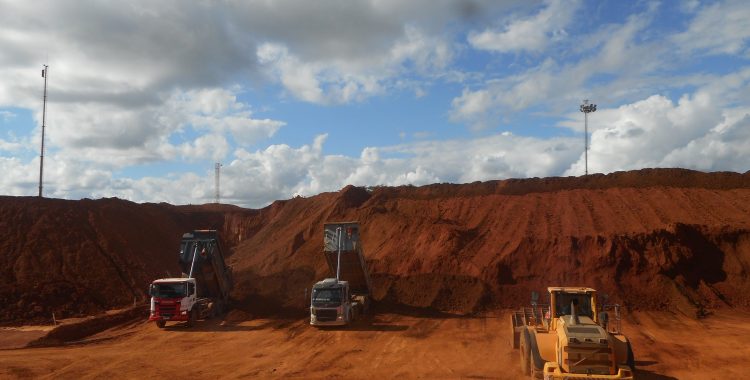
The project focused on CBA’s operations in the Zona da Mata, in Minas Gerais, Brazil. It is an area characterised by hilly landscapes, and bauxite is usually found near the surface of these hills. CBA’s bauxite extraction takes place in different locations within this area. It usually consists of removing part of the soil on top of the hills to remove the bauxite content. Although CBA has mining rights in the area, these lands are owned by local communities with whom the company makes a contract to lease the land. As a result, CBA’s work relies on functional relationships with communities. CBA does not operate more than two or three mines at the same time, and each individual bauxite operation lasts no more than six months. However, the contracts with landowners last much longer (between four and six years) to allow for the rehabilitation of the land so that it can be returned with the same or better physical and chemical properties to restore its original use (coffee plantation, eucalyptus production or pasture).
CBA’s experience offers valuable lessons for other mining and mineral sourcing companies seeking to enhance community grievance mechanisms and access to remedy. Key lessons from the project are set out below.
Setting the foundation: managing impacts proactively
Effective grievance management starts with understanding the company’s social and environmental impacts. By addressing potential issues early through sound impact management, companies can prevent many grievances from arising.
One of the central lessons from CBA’s experience is that managing potential impacts begins long before a complaint is raised. Defining concrete actions to address and mitigate social and environmental impacts is essential to building trust with communities and avoiding harm. As a result, CBA’s grievance mechanism is not a stand-alone system. Instead, it is part of the company’s responsible business ecosystem that includes environmental management, social impact assessments, and ongoing dialogue and engagement with communities. This integration allows the company to understand grievances in the context of broader impacts and respond to particular concerns as well as implement strategic programmes and initiatives integrated into business operations in order to address identified impacts.
For example, CBA’s rehabilitation and restoration operations have been instrumental in addressing concerns related to the ability of landowners to maintain the quality of the land and be able to use it as they did before CBA leased it for bauxite production. Importantly, for many of these communities, the land represents a key or main source of income. The company’s commitment to restoring mined areas to productive use – combined with transparent communication about progress towards rehabilitation – has helped prevent misunderstandings and build credibility. Social and environmental programmes remain a firm commitment for CBA.
(More information is available in CBA’s annual reports and website.)
Mapping stakeholders and their themes of interest / key impacts
Engagement should not only occur when problems arise but also regularly throughout business operation cycles and key activities. Ongoing dialogue builds the trust needed for communities to raise concerns constructively and pre-emptively.
The effective management of social and environmental impacts begins with knowing who your stakeholders are and what matters to them. CBA conducted a comprehensive mapping of key stakeholders, including landowners, residents in self-rescue areas (areas around the dam affected in the event of a dam breach), civil society groups and local institutions. This mapping exercise helped the company identify groups most affected by its operations, understand their main themes of interest, and anticipate and proactively manage potential concerns. By linking each stakeholder group to relevant social and environmental impacts, CBA ensured that issues raised through the grievance mechanism are not treated in isolation, but instead are treated as part of ongoing impact management.
Integrating engagement across the business
Everyone who interacts with stakeholders – from site managers to contractors – has a role to play in engagement and grievance management. Empowering people from different departments to manage community relationships ensures responsiveness and ownership across the organisation.
Another key lesson from CBA’s experience is that stakeholder engagement and grievance management are most effective when they are not confined to the social or sustainability teams. Instead, they are seen as part of how the entire business operates. CBA has trained employees and subcontractors across departments – such as operations, technical teams, and security – on how to engage with stakeholders and receive grievances. In the Zona da Mata, a rural context in Minas Gerais, community members might prefer to voice their concerns directly to familiar company representatives rather than through an online or official communication or grievance channel. Therefore, it becomes very important for CBA to ensure that all employees and subcontractors who interact with community members understand their role in receiving and escalating concerns through the appropriate channels.
Setting up accessible channels for grievance submission and handling
An effective mechanism is the one that people actually use. Adapting communication channels to local preferences – e.g. WhatsApp, face-to-face discussions, or speaking to people at local facilities – helps ensure the mechanism is inclusive and trusted.
To guarantee accessibility of grievance mechanisms, channels for raising concerns must align with the communication preferences and realities of affected communities. In CBA’s experience, community members can raise concerns through a variety of channels: by phone, by speaking directly with CBA employees, or by visiting the porter’s lodge of the local operation. This means that any communication channel can serve as a vehicle to record a grievance, which is then properly flagged internally and addressed. When a concern is received, CBA’s teams follow a clear internal process to categorise and address the issue – whether it relates to operations, environmental impacts, or code of conduct breaches – and involve the right departments until a resolution or remedy is achieved. This flexibility has made the grievance mechanism more approachable and has encouraged open communication. CBA also records and categorises informal complaints, ensuring that no concern goes untracked, regardless of how it is raised.
Making continuous improvement work in practice
A grievance mechanism is never “finished.” It must evolve in line with leading practice, community feedback, and the impact of company operations on society and the environment.
While existing channels serve many stakeholders well, CBA recognises that an effective grievance mechanism is a process that requires continuous monitoring, learning and improvements to ensure it continues to serve its purpose. The company has shown a commitment to continuously align its practices with the effectiveness criteria for grievance mechanisms outlined in the UN Guiding Principles on Business and Human Rights (UNGPs) and continues to clearly monitor how issues are remediated. The collaboration with Tetra Pak and Levin Sources helped map CBA’s existing strengths and identify concrete areas for improvement, a reminder that implementing an effective grievance mechanism is a continuous process of learning and refinement. For example, the pilot project helped to identify some areas for concrete improvements, such as ensuring accessibility and awareness of CBA’s grievance channels for stakeholders who do not yet have established relationships with CBA, and ensuring they can raise concerns anonymously if they wish.
CBA’s experience shows that understanding the company’s impacts is key to handling grievances and developing remedies. Taking concrete actions to effectively reduce and mitigate adverse impacts can reduce the number of grievances and hostility from communities.
Importantly, this project also demonstrates how a collaborative approach between upstream and downstream supply chain partners (in this case, a mining company and a downstream packaging manufacturer) helps build trust and allows the parties involved (both local and corporate levels) to openly discuss challenges, provide support, and monitor continuous improvement.
For more information, please contact: hello@levinsources.com.
