

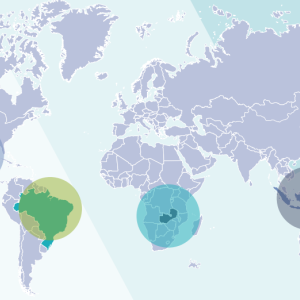
This study, commissioned by the Deutsche Gesellschaft für Internationale Zusammenarbeit (GIZ) and conducted by Levin Sources Ltd, examines potential gaps, challenges, and opportunities associated with the implementation of European Union (EU) due diligence regulations in mineral supply chains. It is based on qualitative case studies from four mineral-producing countries: Indonesia, Zambia, Mexico, and Brazil, and draws on semi-structured interviews with public authorities, civil society, upstream industry actors, as well as on a small-scale survey.
Key findings:
Awareness: Overall, the findings indicate a moderate level of awareness of EU due diligence regulation among stakeholders in the four producer countries, with civil society organisations (CSOs) and industry actors demonstrating higher awareness than public authorities and the EU Corporate Sustainability Due Diligence Directive (CSDDD) being the most widely recognised instrument, reflecting its broad scope and prominence.
Perceived opportunities: Stakeholders across the four countries generally view EU due diligence regulations positively and consider them highly relevant to their organisations and to government policy. They highlight a range of opportunities, including:
- improved human rights and environmental outcomes;
- greater involvement of rightsholders, and strengthened dialogue and collaboration with industry;
- enhanced access to remedy, particularly through civil liability provisions;
- the mandatory nature of the regulations, which offers greater consistency (in contexts of weak domestic enforcement);
- improved competitiveness and access to European markets.
Perceived risks: At the same time, stakeholders consistently raised concerns about potential risks and unintended consequences, including:
- disproportionate compliance burdens on small and medium-sized enterprises (SMEs) and artisanal and small-scale mining (ASM) actors, resulting in market consolidation;
- a disconnect between EU regulation and national strategies, undermining local ownership;
- a perceived growing complexity of overlapping regulations and standards risks increasing administrative burdens, diverting resources away from meaningful risk mitigation and remediation.
Preparedness: Nearly half of the stakeholders consulted have begun preparing for EU due diligence regulations, primarily in relation to the EU CSDDD. Preparedness appears most advanced in Brazil and Indonesia, while stakeholders in Zambia and Mexico report lower levels of readiness. Current efforts focus largely on awareness-raising (across all stakeholder groups); supplier engagement and establishment of due diligence management systems (among industry actors); rightsholders’ preparedness support through training, supply chain mapping, and, in Brazil, exploring the strategic use of EU regulation in litigation (by civil society); and efforts to align national frameworks and facilitate dialogue with downstream actors (by public authorities in Indonesia, Zambia).
Based on these findings, the study outlines a set of targeted measures for GIZ, to help mitigate negative effects and support stakeholders in mineral-producing countries in preparing for implementation. These include expanding inclusive awareness-raising beyond EU-linked firms to local SMEs and non-Western partners; strengthening understanding and the practical application of due diligence; and addressing confusion by promoting alignment between mandatory regulations and voluntary standards.
The study concludes that these efforts could be significantly enhanced by establishing dedicated local human rights and environmental due diligence (HREDD) focal points in mineral-producing countries. These hubs could provide technical assistance, contextualised information, access to risk data, and spaces for dialogue between local stakeholders and EU downstream actors, thereby supporting more effective, inclusive, and sustainable implementation of EU due diligence regulation.
