

Levin Sources helps clients develop evidence-based strategies that address poverty reduction, environmental sustainability, and conflict prevention whilst advancing responsible minerals value chains.

A summary of reports, studies, thought pieces and articles published by Levin Sources in 2018.
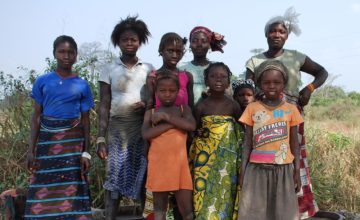
How can a fairer mineral system empower women and create more opportunities for us all? Global and Local Policy Dimension Briefing Documents for the European Commission and GIZ/BMZ available for consultation and feedback now
Levin Sources was contracted by GIZ to conduct in-country stakeholder engagement to establish a guidance document that informs KP stakeholders in programming and implementation of the KPCS in host countries.
Alongside the launch of ‘Follow the Money: A handbook for identifying financial flows linked to Artisanal and Small-Scale Gold Mining’, we are also releasing our first case study demonstrating application of the handbook’s methodology to analyse the IFFs surrounding the ASGM sector in Sierra Leone, showing its practical application and the importance of financial mapping to a meaningful understanding of ASGM.
Following international interest for its comprehensive and actionable methods, the GIFF project handbook has been translated into Spanish. El manual del Proyecto GIFF ha sido traducido al español, dado el interés internacional que han atraído sus métodos comprensibles y viables.
The GIFF project partners – Levin Sources and the Global Initiative Against Transnational Organised Crime – are proud to release the culmination of many months of discussion and research: ‘Follow the Money: A handbook for identifying financial flows linked to Artisanal and Small-Scale Gold Mining’.
Support for Formalization of ADM in Central African Republic. This Comparative Study assesses how artisanal diamond miners can be incentivised to formalise their activities through reduced costs of licensing, royalties, taxes, and fees.
The aim of the Diamond Development Initiative (DDI), and thus of this report, is to enhance human security in artisanal diamond mining areas, contributing to making artisanal mining less conflict prone and more beneficial to the labourers, miners, and communities, and the regions and countries in which they work.
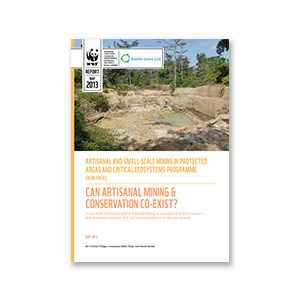
This report is a case study containing a situational analysis of artisanal and small-scale mining (ASM) of gold and diamonds in and around the Malema and Nomo areas of Sierra Leone’s Gola Rainforest National Park (GRNP).
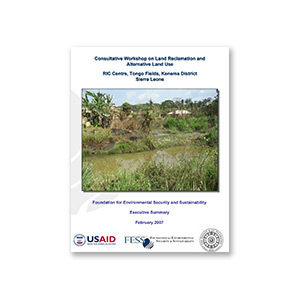
Tongo Fields is the second largest diamond-producing area in Sierra Leone. Endowed with both alluvial and kimberlite deposits, Tongo Fields became a major hub of artisanal diamond mining during and after the period of conflict from about 1999 to 2002.

In 2015, Levin Sources and The Global Initiative against Transnational Organized Crime came together around a shared urgency to better understand how illicit financial flows act as impediments to the formalisation of Artisanal and Small-scale Gold Mining (ASGM), with a focus on gold.

ASM-PACE addressed the impacts of Artisanal and Small-scale Mining (ASM) occurring in protected areas and critical ecosystems (PACE).
Levin Sources conducted scoping studies in Sierra Leone, Tanzania and Uganda to assess the potential of fair trade gold from these countries. The aim was to identify producer organisations and potential partners for setting up Fairtrade/Fairmined gold production in Africa.
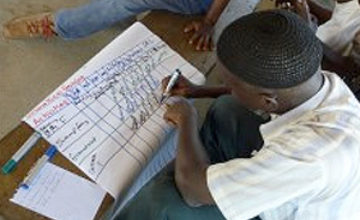
Working with Tetra Tech ARD, Levin Sources supported USAID’s Property Rights and Artisanal Diamond Development (PRADD) project by developing a comparative study to understand how artisanal diamond miners in the Central African Republic (CAR) could be incentivised to formalise their activities through reduced costs of licensing, royalties, taxes, and fees.
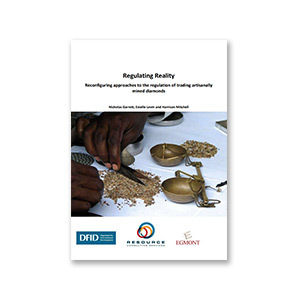
This study examines internal and external trade mechanisms in artisanally mined diamonds in the Democratic Republic of the Congo (DRC) and Sierra Leone, with the aim to determine optimal practices for regulating the trading chains and harnessing them for developmental ends.
How the GIFF Project can help stakeholders formalise the Artisanal and Small-scale Mining sector
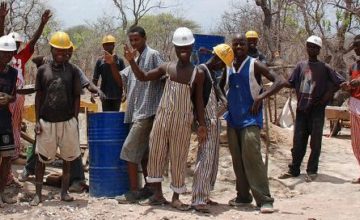
In celebration of Fairtrade fortnight (Feb 29-March 13), Anna Barker talks to Estelle Levin-Nally about the story behind Fairtrade gold, the challenges it faces, and why it’s so important.

The Ebola outbreak in Sierra Leone disproportionately affected poor people. Here is why.
Ebola worsened the situation of many Sierra Leone orphans, creating uncertainty regarding their future.
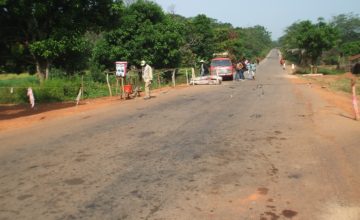
From contact tracing to staffing checkpoints, young people played a key role in managing the Ebola outbreak in Sierra Leone. Here is how.
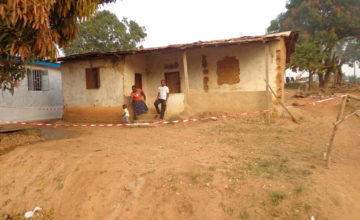
During the 2014 Ebola outbreak, people suspected of being infected were quarantined, often to a dear societal cost.
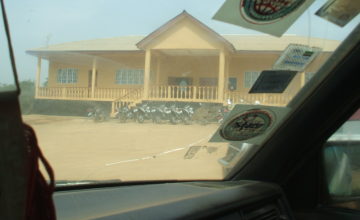
Looking into the medical and military responses to the 2014 Ebola outbreak in Sierra Leone
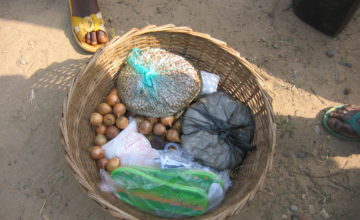
How the Ebola outbreak is impacting hunting and gathering in Kono district.
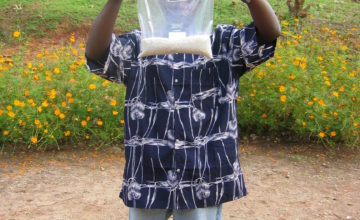
Looking into the consequences of Ebola for the miners/farmers of Sierra Leona.
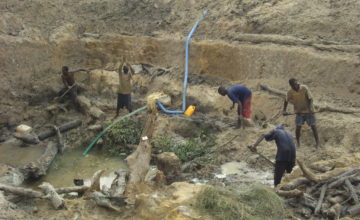
An analysis of the economic impact of the outbreak and local efforts to remediate the consequences of ebola on mining communities
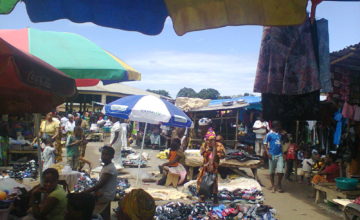
Looking into the consequences of long-term school closures in Sierra Leone for students and schoolchildren during the Ebola epidemic.

Sierra Leone has very high unemployment figures, particularly amongst youth. The World Bank estimates that around 60% of the country’s youth are unemployed, the highest rate in sub-Saharan West Africa.
As the world experiences a Covid-19-related lockdown, we look back at what this meant for Sierra Leone during the Ebola outbreak.
An analysis of the impact of the Ebola outbreak for ASM diamond miners in the Kono District of Sierra Leone.

I awoke at 4:30am GMT and, like any normal day for me, I started the morning by offering prayers, and later listening to the news that bellowed through on the radio.

In March 2013, I spent several weeks working at the headquarters of Not For Sale, a California-based NGO that seeks to combat modern slavery around the world.

Since its inception, Levin Sources has worked in Sierra Leone in the artisanal and small-scale mining diamond sector thanks to its network of in-country associates.